Start here
Not sure what to fix? Start with the $97 checkup.
Written review. Prioritized fix list. 3 to 5 business days. No call needed.
Get the Checkup → Book a free 15-min call

Written review. Prioritized fix list. 3 to 5 business days. No call needed.
Get the Checkup → Book a free 15-min call
A written audit of your site, lead path, ad tracking, and follow-up gaps. Delivered in 3 to 5 business days. No call required.
Have questions first? Book a free 15-min call
Stop losing leads to slow websites and manual tasks. Start with the $97 Website and Workflow Checkup. Get $97 Checkup
Every week there is a new AI tool claiming it will change your business forever. Most of them are noise. A few of them are genuinely useful, and those are the ones worth your attention.
After testing dozens of AI tools across writing, automation, design, and video, these six stood out as the ones small business owners are actually getting value from in 2026. Not because they are flashy, but because they solve real problems and save real time.
If your business involves writing anything — emails, proposals, blog posts, product descriptions, internal docs — Claude from Anthropic is the tool to look at first. It handles long-form content better than most alternatives and produces writing that sounds like a person wrote it, not a machine.
Where Claude really pulls ahead is in working with documents. You can upload contracts, reports, or spreadsheets and ask it to summarize, compare, or extract specific information. For small business owners who spend hours reading through vendor agreements or client briefs, that alone justifies the subscription.
Claude also handles nuance well. Ask it to write in your brand voice, adjust tone for different audiences, or rewrite something three different ways, and the output is consistently usable. If you have tried other AI writing tools and felt like you were spending more time editing than you saved, Claude is worth a second look.
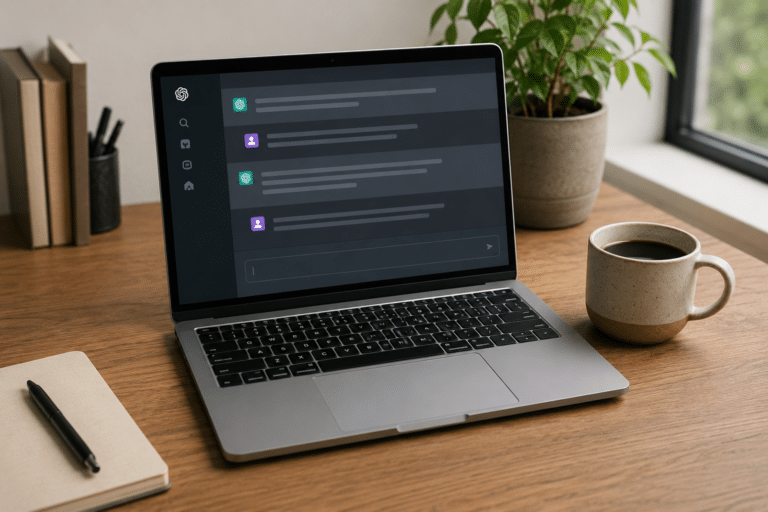
ChatGPT from OpenAI remains the go-to for quick research, brainstorming, and working through ideas. Its strength is breadth. Need to understand a new market, explore pricing strategies, or generate 20 variations of a tagline? ChatGPT handles that kind of divergent thinking well.
The browsing feature makes it useful for pulling together information from across the web without opening 15 tabs. For small business owners who need to make decisions quickly and do not have a research team, that is a meaningful time saver.
Where it fits best is in the early stages of any project. Use it to explore options, pressure-test ideas, and gather background information before you commit to a direction. It is less about producing final output and more about accelerating the thinking process.
If you have ever wished your apps talked to each other without you playing middleman, Zapier is the answer. And the AI features they have added make it significantly easier to set up automations without technical knowledge.
Zapier AI lets you describe what you want in plain language. Tell it “when someone fills out my contact form, add them to my email list and send me a Slack notification” and it builds the workflow for you. You can review and adjust before turning it on, but the heavy lifting is done.
For small businesses running on a patchwork of tools — a CRM here, a project manager there, an invoicing app somewhere else — Zapier AI turns that mess into something that actually works together. The time savings compound quickly once you start automating the repetitive stuff.
Most small businesses have important information scattered across Google Docs, email threads, Slack messages, and someone’s memory. Notion solves the scatter problem, and Notion AI makes the information inside it actually useful.
You can ask Notion AI to find specific details across your entire workspace, summarize meeting notes, draft follow-up emails based on project updates, or create action items from a messy brainstorm document. It works with what you already have in Notion rather than requiring you to start from scratch.
The real value shows up over time. The more your team puts into Notion, the smarter the AI gets about your business. It starts surfacing relevant context automatically — pulling up related projects when you create a new one, suggesting next steps based on past patterns. For businesses that struggle with institutional knowledge walking out the door when someone leaves, this is a serious upgrade.
Small business owners who are not designers still need to produce professional-looking visuals constantly. Social media graphics, presentations, product mockups, email headers — the list never ends. Canva has been the answer for years, and the AI features make it even faster.
Magic Design generates complete layouts from a text description or a single image. Magic Write handles the copy inside your designs. Background remover, image expansion, and style matching all work with a click. What used to take an hour of fiddling with templates now takes five minutes.
The biggest win for small businesses is brand consistency. Set up your brand kit with colors, fonts, and logos, and Canva AI applies them automatically to everything you create. No more spending money on a designer for every social post or wondering why your Instagram looks different from your website. If you are producing visual content regularly, the right tools make all the difference.
Video content is not optional anymore for most businesses, but the editing process has always been the bottleneck. Descript changes the game by letting you edit video and audio the same way you edit a text document. Delete a sentence from the transcript and it disappears from the video.
The AI features go further. Eye contact correction fixes those moments when you were reading notes off-screen. Filler word removal cleans up “ums” and “ahs” automatically. Studio Sound makes a recording from your kitchen sound like it came from a professional studio. For solo business owners recording content on their phone, these features close the quality gap significantly.
Descript also handles transcription, captions, and clip creation for social media. Record one long video and it will identify the best moments, add captions, and format them for different platforms. That turns one piece of content into ten without extra hours of work.
You do not need all six of these. The best approach is to identify where you are spending the most time on tasks that feel repetitive or that you are not great at, then pick the one or two tools that address those specific pain points.
If writing takes up your mornings, start with Claude. If you are drowning in manual data entry between apps, start with Zapier AI. If your social media looks inconsistent, start with Canva AI. The goal is not to adopt every AI tool available. The goal is to get your time back on the things that do not need your direct attention so you can focus on the work that actually grows your business.
The tools on this list have proven themselves over months of real use, not just impressive demos. They work reliably, they are priced reasonably for small businesses, and they solve problems you are probably dealing with right now. That is a low bar, but a surprising number of AI tools still fail to clear it.
Two fixed-scope builds that fix both problems. No retainer to start. Live in under two weeks.