


 FREE + PRACTICAL
Join Practical Tools Explained and get practical website and automation tips that help small businesses capture more leads, follow up faster, and waste less time on manual work.
No fluff. No spam. Just useful advice for small business owners who want better systems and more revenue.
Stop losing leads to slow websites and manual tasks. Get a complete Website and Workflow Checkup for just $97. Start Here→
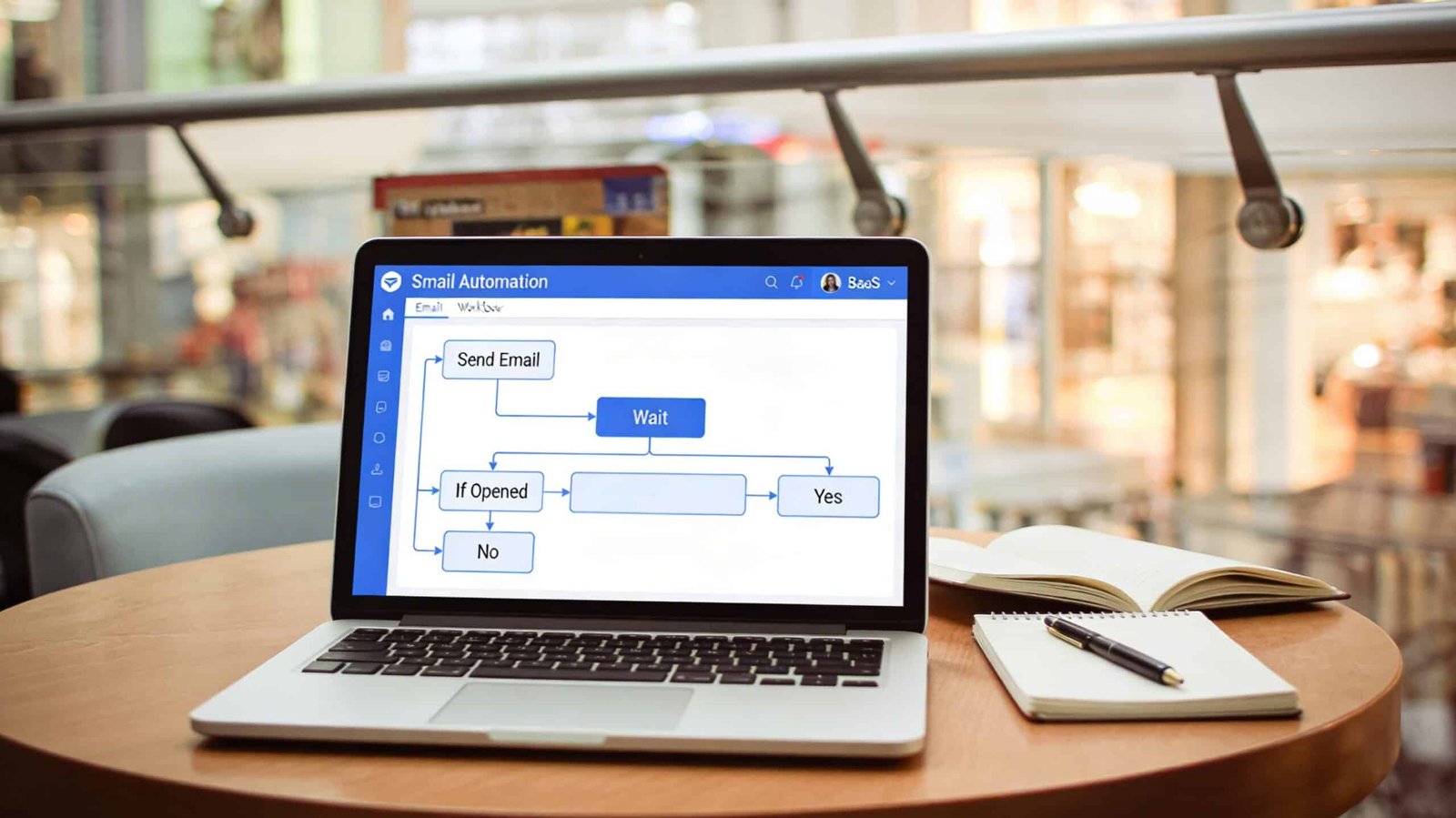
The reason most automated lead nurturing feels bad is not a technology problem. It’s a content problem. The sequences are written generically, the timing is set to whatever the default was, and the logic is binary: someone opts in, they get five emails, whether those emails are relevant to why they opted in or not. The reader feels processed rather than communicated with, and the conversion rate reflects that.
Fixing this doesn’t require a more expensive automation platform. It requires being more deliberate about what the automation is actually saying and to whom it’s saying it.
The starting point is understanding that automated lead nurturing is not a substitute for sales conversations. It’s a bridge between the moment someone raises their hand and the moment they’re ready to have one. The job of every email in a nurture sequence is to move someone one step forward in their understanding of your business and one step closer to a clear decision. Not to close the deal. Not to dump every piece of information about your services into their inbox. Move them one step.
Map the Lead Source Before You Write a Single Email
The most common automation mistake is building one nurture sequence and sending it to every lead regardless of where they came from or what they said they needed. A person who downloaded a guide about pricing for your services has different questions than a person who came from a referral and booked a discovery call. Treating them the same way means your nurture sequence is accurate for nobody.
Before writing anything, list every way a lead enters your pipeline. Website contact form. Lead magnet download. Referral introduction. Cold outreach reply. Social media inquiry. Each of these entry points tells you something about where the lead is in their thinking. Someone who found you through a search and downloaded a resource is earlier in their research than someone who was referred directly and is already asking about availability. The sequence you write for each group should reflect that difference in starting position.
This doesn’t mean building ten different sequences from scratch. It means building two or three sequences at different temperature levels and routing leads to the right one based on their entry point. A warm lead sequence for referrals and direct inquiries. A nurture sequence for content-driven leads who are still evaluating options. The content of each sequence can share some common pieces, but the tone, pacing, and assumed knowledge level should be different.
Embed Voice at the Writing Stage, Not the Platform Stage
A lot of business owners try to make automated sequences feel human by changing the formatting or the send name. Those things help slightly. What actually makes a sequence feel like it came from a real person is the writing itself.
Your brand voice has specific characteristics that you probably haven’t documented but that show up consistently when you write or talk about your work. The level of formality. Whether you use industry terminology or plain language. Whether your sentences are long and explanatory or short and direct. Whether you use first-person examples from your own experience or stay in the second person and speak directly to the reader’s situation. Whether you tend to give clear recommendations or present options.
Before writing any automation sequence, write three to five sentences that describe how you naturally communicate with a new client in the first few days of a relationship. Not how you wish you communicated. How you actually do. Then use those sentences as the tone filter for every email you write for the sequence. If an email in the sequence sounds like it could have been written by anyone, it needs to be rewritten. It should sound like it could only have been written by you.
This matters practically because leads from referrals, in particular, often come with a prior expectation of what you’re like based on what the referring person told them. If your automated response sounds nothing like the person they were told about, it creates a disconnection that makes them less likely to move forward. The AI chatbot piece on customer communication covers this trust gap in more detail and it applies directly to nurture automation. Consistency between your automated touchpoints and your actual voice is what closes that gap.
The Sequence Structure That Works
A five-email nurture sequence with clear intent at each step outperforms a longer sequence with vague intent throughout. Here’s a structure that works for service businesses and keeps the voice intact across each touchpoint.
Email one goes out immediately after opt-in or inquiry. It delivers whatever was promised, whether that’s a guide, a confirmation, or an acknowledgment of their message. It is short. It does one thing. It does not try to explain your entire business or pitch anything. It sets the expectation for what comes next.
Email two goes out two days later and addresses the most common question someone at this stage has about your type of service. Not a feature list. A specific question. “Most people who reach out to us first want to know about timeline” or “The thing most new clients ask about pricing is…” This positions you as someone who understands their situation rather than someone moving through a script.
Email three goes out four days after that and shares a specific, concrete example of a result you’ve produced for a client. Not a testimonial quote in isolation. A brief story with context. What the situation was, what you did, what changed. Two or three sentences. The specificity is what makes it credible and what differentiates it from the generic “clients love working with us” language that appears in most nurture sequences.
Email four goes out three days later and removes friction. It addresses the most common reason someone at this stage hesitates to move forward. Maybe it’s price. Maybe it’s timeline. Maybe it’s uncertainty about whether your service applies to their specific situation. Name the hesitation directly and address it clearly. This email, done well, is often the one that generates the reply that converts.
Email five is the direct ask. A clear, simple invitation to take the next step. One link. One call to action. No alternatives. If you’ve done the previous four emails correctly, this one doesn’t need to be long.
Using Automation Platforms Without Overcomplicating Them
ActiveCampaign, Mailchimp, ConvertKit, and HubSpot all support the conditional logic needed to route leads to different sequences based on entry point, tag, or behavior. The feature that matters most here is tagging at opt-in, which allows you to automatically apply a tag based on which form, page, or campaign a lead came from. That tag then determines which sequence they enter.
Setting this up the first time takes a few hours. After that it runs without maintenance unless you change your offers or your service structure. The automation platform isn’t writing your emails. It’s doing the routing and timing work that would otherwise require you to manually track every lead’s position in the pipeline and send emails at the right intervals. That work, done manually across 20 or 30 leads simultaneously, is where most service businesses lose track and let warm leads go cold.
If you’re currently managing leads through a combination of manual email and a spreadsheet, automating your invoicing and your lead nurturing at the same time is worth doing together. Both processes run on the same logic: take a task that happens identically every time, configure it once, and let it run. The cumulative time savings compound week over week.
The Maintenance Cycle
Automated sequences need to be reviewed every quarter. Not rewritten from scratch. Reviewed. Check open rates and click rates on each email. The email with the lowest open rate usually has a subject line problem. The email with the lowest click rate usually has a call-to-action problem or an offer that isn’t matching what the reader is ready for at that point in the sequence. Fix the specific problem rather than replacing the whole sequence.
Also review whether the sequence still reflects how your business works. If you changed a service offering, updated your pricing structure, or shifted your positioning, the nurture sequence needs to reflect those changes. An automated sequence promoting a service you no longer offer, or describing your business in a way that doesn’t match your current focus, actively works against conversion rather than supporting it.
The goal is a sequence that runs reliably, sounds like you, and moves leads toward a real conversation without requiring your involvement at every step. That’s a legitimate business asset. It takes a few focused hours to build correctly and pays back in time and revenue for months afterward.