Start here
Not sure what to fix? Start with the $97 checkup.
Written review. Prioritized fix list. 3 to 5 business days. No call needed.
Get the Checkup → Book a free 15-min call

Written review. Prioritized fix list. 3 to 5 business days. No call needed.
Get the Checkup → Book a free 15-min call
A written audit of your site, lead path, ad tracking, and follow-up gaps. Delivered in 3 to 5 business days. No call required.
Have questions first? Book a free 15-min call
Stop losing leads to slow websites and manual tasks. Start with the $97 Website and Workflow Checkup. Get $97 Checkup
Most free paragraph rewriter tools produce output you could not send to a client without editing every sentence. That is not a bug. It is the business model. The free tier exists to show you what a better result looks like if you pay, not to give you a finished product.
This article contains affiliate links. If you buy through them, I may earn a small commission at no extra cost to you.
That said, some free paragraph rewriters are genuinely more useful than others. To find out which ones, I ran the same 150-word business paragraph through six different tools and judged each one on four things: output coherence, whether it retained the original meaning, whether the tone was usable in a professional context, and whether it introduced factual or grammatical errors.
The source paragraph described a project management process for a small agency: how they handle client onboarding, set expectations around revision rounds, and use a shared document to track deliverables. It is the kind of writing that needs to sound professional without being stiff, and where any change to the meaning of a clause would actually matter to a client reading it.
QuillBot is the most widely used free paragraph rewriter, and the free tier imposes a strict 125-word limit per rewrite. The output for the truncated version of the test paragraph was grammatically correct and readable. The problem is that it consistently flattens the original voice into something that sounds like it was written by committee. If your original writing has any personality, QuillBot’s free mode removes it.
The mode selector on the free tier gives you two options: Standard and Fluency. Standard swaps words for synonyms in a way that occasionally changes meaning. Fluency mode is more conservative and produces output closer to the original, which defeats some of the purpose if you are trying to meaningfully rewrite a paragraph rather than just pass a plagiarism check.
Wordtune’s free tier gives you 10 rewrites per day, which is a harder limit than QuillBot’s word cap. For the test paragraph, Wordtune produced three or four alternative versions and presented them as inline suggestions rather than a single replacement. This approach is actually more useful for business writing because you can cherry-pick the best phrase from each suggestion instead of accepting or rejecting the whole thing.
The suggestions tended to be shorter than the original, which is often an improvement but occasionally cut context that mattered. Tone was preserved better than QuillBot in most cases. The 10-rewrite daily cap becomes a real constraint if you are editing a longer document over a single session.
Grammarly’s free tier does not include a full paragraph rewriter in the way QuillBot and Wordtune do. What it offers is sentence-level suggestions for clarity and conciseness, which is a different function. When I used the free version to process the test paragraph, it flagged passive voice and suggested shorter alternatives for two phrases. It did not attempt to rewrite the paragraph as a whole.
If you already use Grammarly for proofreading, the free suggestions have real value as a light editing pass. But treating it as a paragraph rewriter misunderstands what the free tier actually does. The full rewrite functionality sits behind the premium subscription.
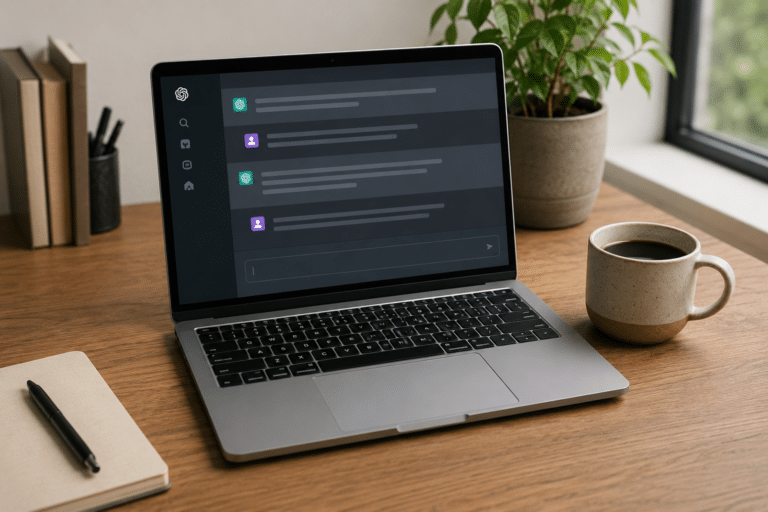
ChatGPT is not a dedicated paragraph rewriter, but it is the most effective free paragraph rewriter I tested. The difference is the prompt. A vague prompt like “rewrite this paragraph” produces output almost as flat as QuillBot. A specific prompt produces something genuinely useful.
The prompt I used: “Rewrite the following paragraph for a professional services audience. Keep the meaning identical. Use active voice. Keep sentences under 20 words where possible. Do not use jargon.” The output retained every substantive point from the original, was shorter by about 15 percent, and sounded like a human wrote it on a good day. No meaning was lost and no errors were introduced.
The limitation is that ChatGPT’s free tier uses GPT-3.5 at times of high demand, which produces noticeably lower quality output than GPT-4. If you are on the free plan, the results are still better than any dedicated free rewriter I tested, but not as consistently strong as what you get with a paid ChatGPT account. For practical workflow automation around your content, Make.com can connect ChatGPT rewrites directly into your publishing process, saving the manual copy-paste step.
Paraphrase Online is a no-account-required tool that processes text without a word limit on the free version. The output for the test paragraph was technically readable but introduced two errors: it changed “revision rounds” to “revision spheres” (a thesaurus substitution gone wrong) and changed the meaning of a sentence about client communication by swapping a key qualifier. You would not catch either error without reading the output carefully against the original.
This is the core risk with synonym-based rewriters: they do not understand meaning, so they can silently introduce inaccuracies. For business writing where precision matters, this class of tool requires more careful proofreading than just writing the paragraph yourself. It is useful for low-stakes content where speed matters more than accuracy.
Google’s built-in “Help me write” feature in Docs is free for Google account holders and accessible without switching tabs. For the test paragraph, the feature offered to “Refine” the selected text with options including Shorten, Elaborate, Rephrase, and Formalize. The Rephrase option produced output comparable to Wordtune’s better suggestions: meaning preserved, slightly different word order, no errors introduced.
The advantage here is frictionless access if you already write in Google Docs. You do not need to open another tab, paste text, or manage an account with a separate tool. The disadvantage is that you have limited control over how the rewrite is executed. There is no prompt interface, so you cannot specify tone, length, or voice preferences the way you can with ChatGPT.
ChatGPT with a clear, specific rewrite prompt outperforms every dedicated free paragraph rewriter I tested. The gap is not close. If you are going to use a free tool for paragraph rewriting in a business context, invest 30 seconds in writing a good prompt rather than using a tool that promises to do it automatically.
Wordtune is the strongest of the dedicated free rewriters because of its suggestion-based approach. Seeing three versions side by side is more useful than accepting a single output. QuillBot is fine for quick synonym variation but strips voice reliably. Paraphrase Online and similar no-account tools are risky for anything where meaning precision matters.
Google Docs “Help me write” is the sleeper option. If you already work in Docs, it is fast enough and accurate enough that opening a separate rewriting tool may not be worth the context switch.
If you want to go deeper on AI writing tools for business use, the ChatGPT review covers practical applications in detail, and the free tool stack for 2026 includes the full suite of writing tools worth keeping in your workflow. For the gap between rewriting a paragraph and rewriting a full piece, the AI help with writing guide is where to go next.
The one use case where a dedicated free rewriter actually beats ChatGPT is quick single-sentence clarity edits when you do not want to open another tab. For a sentence sitting in a live document, Wordtune’s inline suggestions or Google Docs’ Refine feature will save you the tab switch. For anything paragraph-length or longer, ChatGPT with a good prompt wins every time.
Two fixed-scope builds that fix both problems. No retainer to start. Live in under two weeks.