


 FREE + PRACTICAL
Join Practical Tools Explained and get practical website and automation tips that help small businesses capture more leads, follow up faster, and waste less time on manual work.
No fluff. No spam. Just useful advice for small business owners who want better systems and more revenue.
Stop losing leads to slow websites and manual tasks. Get a complete Website and Workflow Checkup for just $97. Start Here→
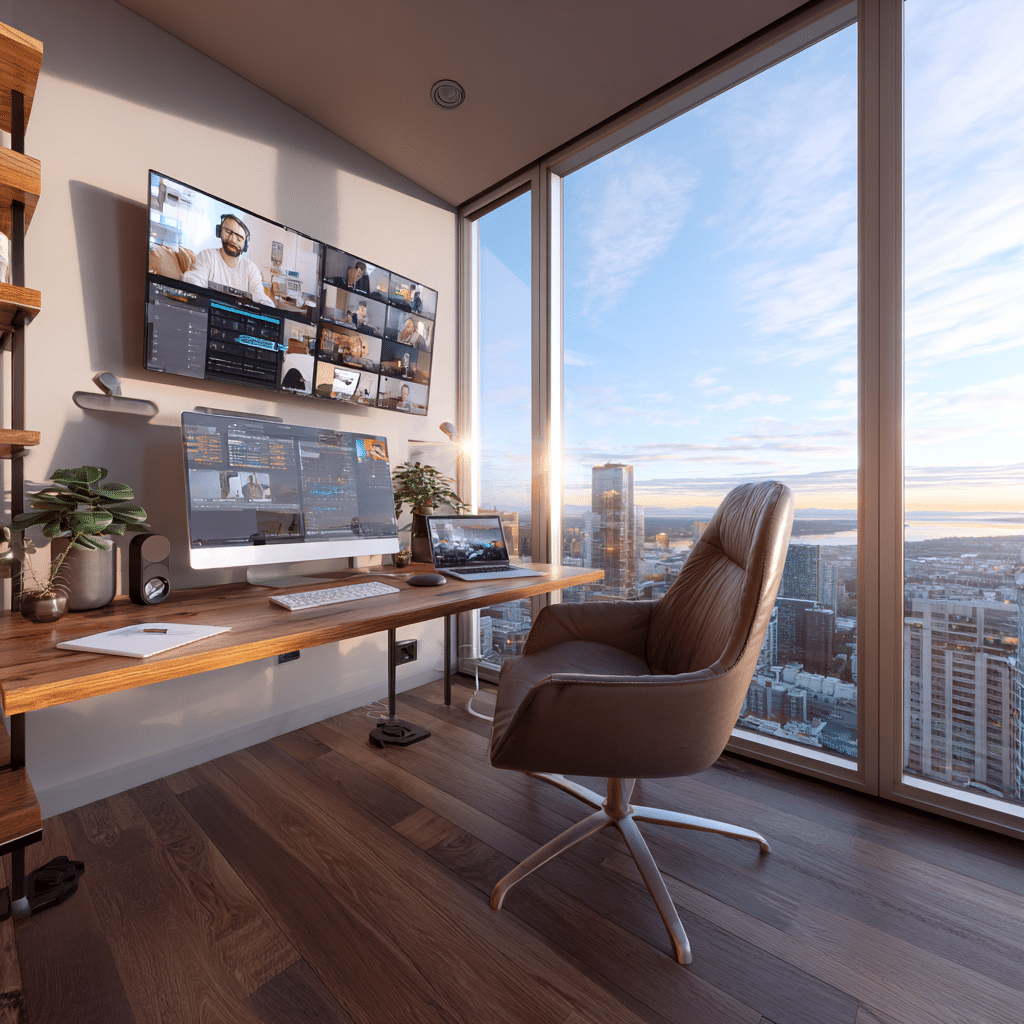
A lot of luxury apartments are built for the listing, not for the workday.
That is the cleanest way I know to say it. They photograph well. The lobby looks expensive. The gym is glossy. The rooftop gets all the attention. The unit itself has the right finishes, the right view, the right kind of modern minimal mood that makes people imagine a very efficient life. Then the actual workday starts. The sound bounces. The internet drags at the wrong times. The natural light hits the desk badly. The room layout forces work, sleep, calls, and downtime into one blurry zone. The place still looks great. It just does not work as well as it promised.
Remote work exposed this gap hard. A lot of spaces are “work from home friendly” only in the most superficial way. They have a counter, a chair, and maybe enough room for a laptop. That is not the same thing as supporting real output. If your income depends on focused work, client calls, writing, strategy, design, editing, coding, selling, coaching, consulting, or anything else where your brain is the product, then the apartment has to be judged by performance, not presentation.
That is where luxury apartments fail the remote work test more often than people expect.
The first problem is noise. Noise is not just whether the space is loud. It is how predictable the noise is and how much it interrupts trust-heavy work. You can survive occasional city noise. What grinds people down is patterned interruption. Hallways, doors, neighboring units, elevators, mechanical hum, traffic waves, sirens, rooftop noise, amenity areas, random building sounds. Those things matter more when your day is built around concentration and communication. If you take calls for a living, noise is not just annoying. It changes how professional you sound and how much effort each interaction takes.
The second problem is layout. A lot of upscale units assume a lifestyle that looks open and modern but performs badly for actual remote work. Beautiful open plan. Very little separation. Lovely windows. Very few good desk positions. Great couch area. Weak work zone. It is fine if you work from home casually once in a while. It is not fine if home is the primary place where revenue gets made. At that point, every weak layout decision gets repeated hundreds of times a year. That has a cost.
Then there is visual fatigue, which people do not talk about enough. If your workspace is trying too hard to be sleek while giving you no real storage, weak cable control, awkward backdrop options, or no clear mental boundary between work and rest, the whole setup starts to feel off even if it looks premium. Remote work does not just need style. It needs support. A space should help you think clearly, move cleanly, store what you need, and reset at the end of the day without your job bleeding into every corner of the room.
There is a business version of this same mistake. Owners build pretty websites that photograph well and feel premium, but they do not convert. Nice design. Weak structure. Good visuals. Soft calls to action. Clean fonts. Muddy offer. That gap between appearance and function is exactly what a lot of remote workers experience in luxury apartments too. They bought the polished version of support and got the polished version of friction.
The internet piece is another one. Building-wide internet or standard service options may be fine for casual users, but a serious remote business often needs more reliability than a typical renter setup provides. Upload speed matters. Stability matters. Backup options matter. If your calls freeze, your uploads stall, your client demos fail, or your live work gets interrupted, the apartment is not just a place you live. It is part of your business infrastructure now. That should change how you judge it.
I also think remote workers overvalue prestige signals and undervalue operational comfort. Big window. Good lobby. New finishes. Nice kitchen. Those are all fine. But what actually changes your output is more basic. Do you have a clean work zone. Can you control sound. Is the lighting workable for calls. Is the chair situation sustainable. Can you store business gear without creating visual clutter. Can you protect focused hours. Can you mentally leave work at the end of the day. That is the real test.
For founders and solo operators, this matters even more because home friction becomes business friction fast. A weak workspace affects your focus, your patience, your energy, and your communication. It affects whether you avoid calls. It affects whether you procrastinate on tasks that need concentration. It affects how cleanly you show up to clients. A space that subtly fights you every day can cost more than the rent difference between units.
This is why I think people need a more practical standard for evaluating remote work spaces. Not “is this beautiful” but “can this support real digital work repeatedly without draining me?” Those are not the same question.
It is also worth saying that expensive does not equal productive. A smaller, less flashy apartment with a better layout, calmer sound profile, stronger desk setup, cleaner lighting, and better workflow discipline can outperform a more expensive unit that wins on visuals and loses on usability. That is not a philosophical point. That is a business point. If you are paying for a place partly because it supports how you work, then it should actually support how you work.
There is a lesson here for business owners beyond apartments too. Do not confuse premium appearance with operational strength. Ask how the system performs under pressure. Ask whether the setup supports the actual job. Ask what happens when a full week of calls, deadlines, content work, and client communication runs through this environment. That is the right question for apartments. It is also the right question for websites, stores, lead funnels, and automation systems.
A lot of remote work problems are not fixed by moving, of course. Some people really do need better routines, better boundaries, better furniture, better devices, or better communication habits. But plenty of people are also trying to force serious work through spaces that were never designed around serious digital work in the first place. Once you see that clearly, the frustration makes more sense.
Luxury apartments do not fail because they are expensive. They fail when they optimize for impression and ignore performance. Remote work notices that immediately.
PTE focuses on building digital systems that perform, not just look polished. The same logic applies here. If your business needs stronger output from its online setup, PTE offers free quotes, strategy calls, websites, automations, and a $97 Website and Workflow Checkup to help tighten what is actually affecting results.