Start here
Not sure what to fix? Start with the $97 checkup.
Written review. Prioritized fix list. 3 to 5 business days. No call needed.
Get the Checkup → Book a free 15-min call

Written review. Prioritized fix list. 3 to 5 business days. No call needed.
Get the Checkup → Book a free 15-min call
A written audit of your site, lead path, ad tracking, and follow-up gaps. Delivered in 3 to 5 business days. No call required.
Have questions first? Book a free 15-min call
Stop losing leads to slow websites and manual tasks. Start with the $97 Website and Workflow Checkup. Get $97 Checkup
This post may contain affiliate links, which means I may earn a small commission at no extra cost to you. I only recommend tools I believe can genuinely help your business.
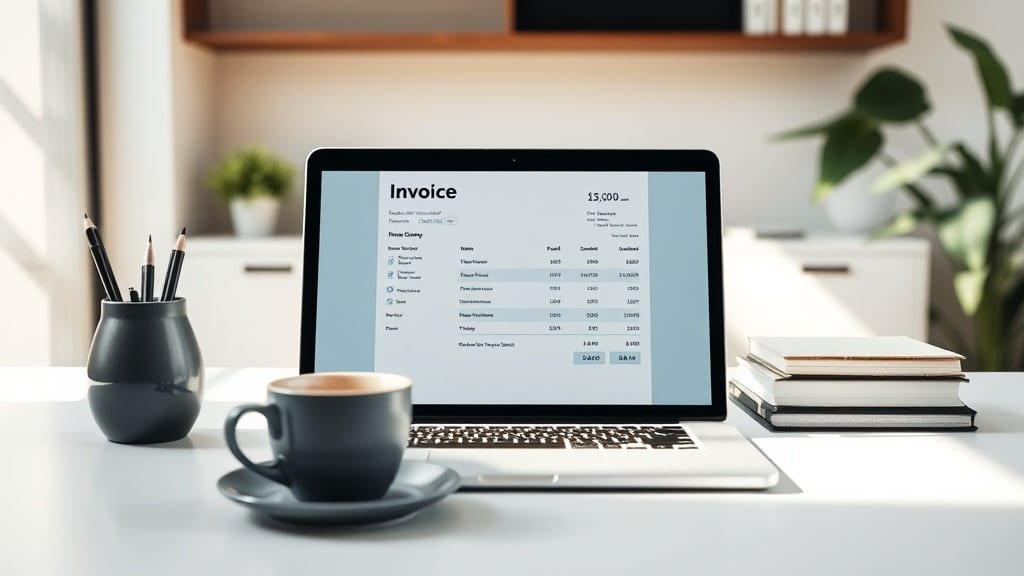
The fastest way to not get paid as a freelancer is to do the work and then figure out the invoicing later. It sounds obvious, but an alarming number of independent workers finish a project, send a vague email asking for payment, and then spend the next sixty days chasing money they already earned. The invoice is not just a receipt. It is the single most important document in your cash flow, and getting it right determines how quickly money moves from your client’s account to yours.
Most freelancers treat invoicing as an afterthought, a boring administrative task they deal with at the end of the month. The ones who get paid consistently and on time treat it as the first thing they set up, before they even land their first client. The difference between these two groups is not luck. It is process.
If you are still sending payment requests via email or using a Word document template you found online three years ago, you are leaving money on the table and making it harder for clients to pay you. Here is how to fix that.
An invoice needs to communicate exactly what was done, how much it costs, and how to pay. Anything less creates confusion, and confusion creates delays. The minimum elements every freelance invoice should include are your business name and contact information, the client’s name and business, a unique invoice number, the date issued, the payment due date, an itemized list of services or deliverables with quantities and rates, the total amount due, accepted payment methods, and your payment terms.
The invoice number matters more than most freelancers realize. Sequential numbering like INV-001, INV-002 creates a professional paper trail that makes tax time easier and gives clients confidence they are working with someone organized. Some freelancers prefer a date-based system like 2026-04-001 so they can quickly identify when an invoice was issued without opening it.
The payment due date is non-negotiable. “Due upon receipt” sounds professional but means nothing in practice because clients interpret it as “whenever I get around to it.” Specify Net 15 or Net 30 and put the actual calendar date on the invoice. “Due by April 28, 2026” is clear. “Net 30” by itself requires the client to do math, which is one more reason for them to put your invoice at the bottom of the pile.
The tool you use to create and send invoices directly affects how fast you get paid. A PDF attached to an email requires the client to download it, figure out how to pay, and manually initiate a transfer. An invoice sent through a proper invoicing platform includes a direct payment link, sends automatic reminders, and tracks whether the client has even opened it.
Platforms like SumUp let you create professional invoices, accept card payments directly through the invoice link, and track payment status in real time. The difference between sending a static PDF and sending a clickable payment link is often the difference between getting paid in three days versus thirty. Clients are busy. The easier you make it for them to pay, the faster the money arrives.
If you are a freelancer who works with international clients, payment processing gets more complicated. Currency conversion fees, slow wire transfers, and hidden bank charges can eat into your earnings. This is where tools like Airwallex become valuable, offering multi-currency accounts and significantly lower fees than traditional banks for receiving international payments.
The right invoicing setup also connects directly to how you track your business finances overall. When your invoicing tool integrates with your bookkeeping, you stop losing track of what has been paid and what is still outstanding.
Payment terms are not a suggestion. They are a business decision that directly impacts whether you can pay your own bills on time. Yet most freelancers accept whatever terms the client proposes without negotiation, often ending up with Net 60 or even Net 90 terms that leave them financing the client’s project with their own living expenses.
For most freelancers, Net 15 is the ideal starting point for small and medium projects. Net 30 is acceptable for larger corporate clients who have established procurement processes. Anything beyond Net 30 should come with a significant premium or require a deposit upfront. If a client insists on Net 60, you are essentially giving them a two-month interest-free loan. Price accordingly.
Deposits change the entire dynamic of freelance payments. Requiring 25 to 50 percent upfront before work begins accomplishes two things: it provides immediate cash flow, and it confirms the client is serious. A client who resists paying a deposit is often the same client who will be difficult to collect from after the work is done. The deposit requirement is as much a screening tool as it is a financial one.
For ongoing retainer work, bill at the beginning of the month rather than the end. This means you are paid before you do the work for that period, not after. It is a small structural change that dramatically improves your cash position and reduces the emotional stress of wondering whether payment will arrive.
Sending an invoice and hoping for the best is not a system. A proper follow-up cadence is what separates freelancers who get paid on time from those who spend hours writing awkward “just checking in” emails.
The day you send the invoice, confirm receipt with a brief message. Something like “Invoice #2026-04-003 for the website redesign project has been sent. Due date is April 28. Let me know if you have any questions.” This establishes the timeline and puts the due date in their inbox as a reference point.
Three days before the due date, send a polite reminder. Most invoicing tools automate this, which is another reason to use a proper platform instead of manual emails. On the due date, if payment has not arrived, send another reminder noting that the invoice is now due. One week past due, the tone shifts from reminder to follow-up, noting that the payment is overdue and requesting an estimated payment date.
After two weeks past due, pick up the phone. Email is easy to ignore. A direct conversation is not. Most late payments are not malicious. They are the result of busy people who let things slip through the cracks. A phone call resolves the majority of overdue invoices faster than any number of follow-up emails.
If you are managing multiple clients and invoices, staying organized becomes critical. The same principles that apply to invoicing apply to your overall approach to setting up business banking so that incoming payments, expenses, and tax obligations all have their proper place.
The short answer is yes, you should include a late payment clause in your terms. The longer answer is that the clause matters more as a deterrent than as an actual revenue source. Most freelancers who include a 1.5 to 2 percent monthly late fee on their invoices rarely have to enforce it, because the existence of the fee motivates clients to pay on time.
Include the late payment terms on every invoice and in your contract. “A late fee of 1.5% per month will be applied to invoices not paid within 7 days of the due date” is standard language. When a payment is late, reference the clause in your follow-up. Most clients will pay immediately once they realize there is a financial consequence for delay.
The clients who are consistently late despite clear terms and follow-ups are telling you something about the working relationship. Chronic late payers are rarely worth the stress and cash flow disruption they cause. Raise your rates for these clients to compensate for the carrying cost of their delayed payments, or consider whether the relationship is worth maintaining at all.
If you work with clients in other countries, your invoicing process needs to account for currency differences, transfer fees, and processing times that domestic invoicing does not have. A $5,000 invoice paid via international wire transfer can lose $50 to $150 in fees between the sending bank, receiving bank, and currency conversion. Over a year, those losses add up to thousands of dollars.
The solution is to offer payment methods that minimize intermediary fees. Airwallex provides multi-currency business accounts that let you invoice in the client’s local currency and receive payments without the typical bank conversion markup. You can hold balances in multiple currencies and convert when rates are favorable, rather than accepting whatever rate your bank offers on the day the wire arrives.
When invoicing international clients, always specify the currency on the invoice. “Total Due: $5,000 USD” eliminates any ambiguity. Include multiple payment options so the client can choose the method that works best for them, which also increases the likelihood of on-time payment.
This connects directly to understanding how to send and receive money internationally without losing a significant percentage to bank fees, a problem that many freelancers working across borders do not realize is solvable.
The ultimate goal is an invoicing system that requires minimal manual intervention. You should be spending your time doing billable work, not formatting invoices and writing follow-up emails. A fully automated cycle looks like this: project milestones trigger invoice creation, the invoice is sent automatically with a payment link, reminders go out on a preset schedule, payments are recorded automatically when they arrive, and your bookkeeping is updated without you touching a spreadsheet.
Most modern invoicing platforms offer this level of automation, but you have to set it up once. Create invoice templates for your most common project types so you are not rebuilding from scratch every time. Set up automatic payment reminders at your preferred intervals. Connect your invoicing tool to your bank account or payment processor so incoming payments are reconciled automatically.
For freelancers managing multiple clients and project types, consider using SumUp to centralize your invoicing and payment acceptance. Having everything in one place means you can see at a glance who owes you money, what is overdue, and what your projected income looks like for the coming month.
If you take one action from this article, let it be this: review every outstanding invoice right now and confirm that each one has a clear due date, a direct payment link, and that your follow-up schedule is in place. Then update your invoice template to include all the elements listed above, set your late payment terms, and automate your reminders.
The freelancers who get paid fastest are not the ones doing the best work. They are often the ones with the best invoicing process. Your work quality keeps clients coming back. Your invoicing system determines whether you actually collect the money you are owed. Build both, and the financial side of freelancing stops being the source of stress it is for most independent workers.
If you found this helpful, you might also want to read our guide on freelancer invoicing payment setup.
If you found this helpful, you might also want to read our guide on how to accept payments small business.
If you found this helpful, you might also want to read our guide on small business payment stack.
Two fixed-scope builds that fix both problems. No retainer to start. Live in under two weeks.






[…] If you found this helpful, you might also want to read our guide on how to create invoice get paid faster. […]