Start here
Not sure what to fix? Start with the $97 checkup.
Written review. Prioritized fix list. 3 to 5 business days. No call needed.
Get the Checkup → Book a free 15-min call

Written review. Prioritized fix list. 3 to 5 business days. No call needed.
Get the Checkup → Book a free 15-min call
A written audit of your site, lead path, ad tracking, and follow-up gaps. Delivered in 3 to 5 business days. No call required.
Have questions first? Book a free 15-min call
Stop losing leads to slow websites and manual tasks. Start with the $97 Website and Workflow Checkup. Get $97 Checkup
This post may contain affiliate links, which means I may earn a small commission at no extra cost to you. I only recommend tools I believe can genuinely help your business.
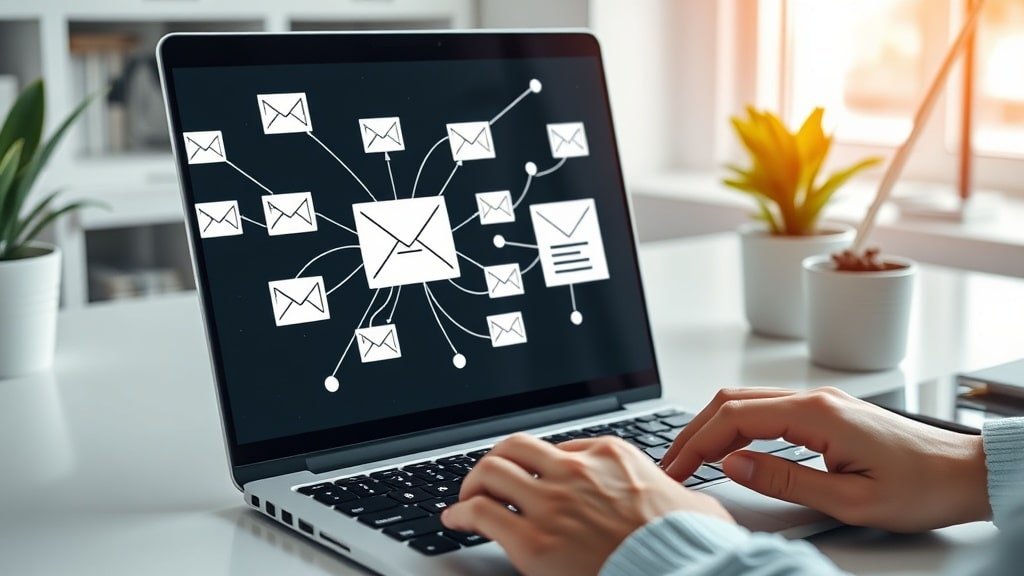
A business owner who sends follow-up emails manually to every new lead spends four hours per week on email. A business owner with an automated email sequence spends four hours once and gets the same result indefinitely. The math compounds with every new subscriber. Ten new leads per week means ten manual follow-up sequences running simultaneously, each requiring your attention and memory. An automated sequence handles ten, a hundred, or a thousand leads with the same four hours of setup work you did once.
The reason most small businesses do not have an automated email sequence is not the technology. The tools are free or nearly free, and they require no coding. The reason is that building an email sequence feels like a large, ambiguous project with no clear starting point. It is not. A functional email sequence that nurtures leads and generates sales has five emails, takes one afternoon to build, and can be running by Friday if you start today.
Here is the exact five-email sequence that works for most small businesses, what each email should say, and how to set the whole thing up this week.
The first email has one job: deliver what was promised and set expectations. If someone signed up for a free guide, the guide download link goes in this email. If they signed up for a newsletter, this email tells them what they will receive and how often. If they requested a quote, this email confirms you received the request and tells them when to expect a response.
The welcome email should be short. Three to four paragraphs maximum. Introduce yourself briefly, not your entire backstory but enough for them to know they are hearing from a real person. Deliver the promised content immediately with a clear, obvious link. Tell them what to expect next: “Over the next week, I will send you four emails with my best insights on [topic]. Each one is short and actionable.”
This email gets the highest open rate of any email you will ever send. New subscribers are most engaged in the first hour after signing up. The welcome email capitalizes on that engagement by delivering value immediately, which builds the habit of opening your emails going forward.
Do not sell anything in Email 1. The person just opted in. They gave you their email address in exchange for something specific. Honor that exchange by delivering it cleanly, without cluttering the email with promotions or multiple calls to action.
The second email arrives the next day and contains the single most valuable piece of content you can share for free. This is your best blog post, your most useful tip, your most eye-opening insight, or the answer to the question your customers ask most often. Whatever content would make someone think “this person really knows what they are talking about” goes in Email 2.
The purpose of this email is to build trust through demonstrated expertise. You are not asking for anything. You are giving something valuable with no strings attached. This generosity creates reciprocity, which is the psychological foundation that makes the later sales email effective.
Frame the content around a specific result. Instead of “Here are some tips about budgeting,” write “Here is the exact method I use with my clients that saves the average small business $400 per month.” Specificity signals expertise. Vague advice signals that you are filling space.
End with a soft question: “What is the biggest challenge you are facing with [topic] right now?” This invitation to reply does two things. It provides you with market research directly from your audience, and replies improve your email deliverability because email providers see engagement as a signal that your emails are wanted.
Email 3 arrives two days after Email 2 and shifts from general expertise to specific proof. Share a case study, a before-and-after, or a specific result that demonstrates what is possible when someone works with you or uses your product. The more specific the numbers, the more compelling the story.
“One of my clients was spending 12 hours per week on social media with no measurable results. After implementing the system I teach, she reduced her social media time to 3 hours per week and tripled her inbound leads within 60 days.” That is a specific story with specific numbers that a reader can see themselves in.
If you do not have client case studies yet, use your own results. “When I started my business, I was losing $200 per month in unnecessary bank fees. After restructuring my banking setup, I reduced that to $10 per month. Here is exactly what I changed.” Personal experience is just as compelling as client results when the specifics are concrete.
This email continues to build trust but introduces the concept that paid solutions exist. You are not selling yet. You are demonstrating outcomes that naturally lead the reader to wonder how they can get similar results.
Email 4 is where the sequence transitions from nurturing to selling. By this point, the subscriber has received your lead magnet, your best free content, and proof that your approach works. They have context for who you are, what you know, and what results you produce. The sales email lands on informed ground rather than cold ground.
Introduce your paid offer by connecting it directly to the problem you have been discussing throughout the sequence. Do not introduce a new topic. The offer should feel like the natural next step from the free content they have already consumed. “In the last few emails, I have shared some of my best strategies for [topic]. My [product or service name] takes everything I have shared and gives you the complete system, including [specific features or components that go beyond the free content].”
Be direct about the price and what the customer gets. Ambiguity around pricing creates hesitation. “The [product name] is $47 and includes [specific deliverables]. It is designed for [specific person] who wants [specific result].” Clear, specific, and honest. No fake urgency, no countdown timers, no “limited spots” if the spots are not actually limited.
Include one link to the sales page or checkout. Not three links to different products. Not a menu of options. One product, one link, one clear action. The guide on how to build a sales funnel that actually converts covers the full strategy behind structuring this kind of offer presentation.
The final email in the core sequence is a direct, clear call to action with a reason to act now. This is not manipulative urgency. It is a genuine reason that making a decision today is better than making it next month. That reason might be a limited-time discount, a bonus that expires, or simply the honest observation that the problem they signed up to solve is not going away on its own, and every week they wait is another week of the same results.
Recap the problem, recap the solution, and make the ask directly. “If [problem] is still costing you [specific consequence], the [product name] is the fastest way to fix it. Here is the link: [link]. If you have questions before purchasing, reply to this email and I will answer them personally.”
The offer to answer questions via reply is important. It converts people who are on the fence but have one specific concern stopping them. These are often your most qualified buyers because they have read every email, they understand the offer, and they just need one answer before they commit.
Systeme.io handles the entire email sequence automation on its free plan. You get unlimited emails to your first 2,000 contacts, trigger-based automation that sends each email at the correct interval after signup, and the ability to segment subscribers based on their behavior. The setup process takes about an hour once you have your five emails written.
Create a new automation workflow. Set the trigger as “new contact added to [your list name].” Add the first email to send immediately. Add a delay of one day, then add Email 2. Add a delay of two days, then Email 3. Continue with the appropriate delays for Emails 4 and 5. Once the workflow is active, every new subscriber receives the entire sequence automatically without any action from you.
For ecommerce businesses, Shopify includes email marketing tools that integrate directly with your product catalog. This means your email sequence can include dynamic product recommendations based on what the subscriber browsed, which increases relevance and conversion rates for product-based businesses.
The email sequence works best when it is fed by a growing email list. The guide on how to get your first 100 email subscribers covers the acquisition side that keeps new people entering the top of this sequence.
Once a subscriber completes the five-email sequence, they move into your regular email cadence, whether that is a weekly newsletter, monthly update, or periodic promotions. The automated sequence has done its job: it introduced you, built trust, demonstrated results, and presented your offer. From here, your ongoing emails maintain the relationship and present future offers to an audience that already knows and trusts you.
Track the open rates and click rates of each email in the sequence. If Email 3 has a significantly lower open rate than Email 2, the subject line needs work. If Email 4 has a high open rate but low clicks to your offer, the email copy or the offer positioning needs adjustment. The sequence is not a set-and-forget asset. It is a living system that improves with data.
Write Emails 1 and 2 today. Schedule Email 3 for tomorrow. Finish Emails 4 and 5 by Thursday. Set up the automation on Friday. By the weekend, your email sequence is live and working for every new lead that enters your business from this point forward. The step-by-step process for creating a digital product to sell through this sequence is covered in the guide on launching your first digital product.
If you found this helpful, you might also want to read our guide on small business automation stack.
If you found this helpful, you might also want to read our guide on how to set up shopify store.
Two fixed-scope builds that fix both problems. No retainer to start. Live in under two weeks.



[…] email, keep the first automation tight and useful. If you need help with the structure, use this email sequence guide as your framework. A practical first setup is four emails. The first delivers the free resource and […]